Paraguay Tax Residency: The Easiest 0% Tax Haven for Digital Nomads
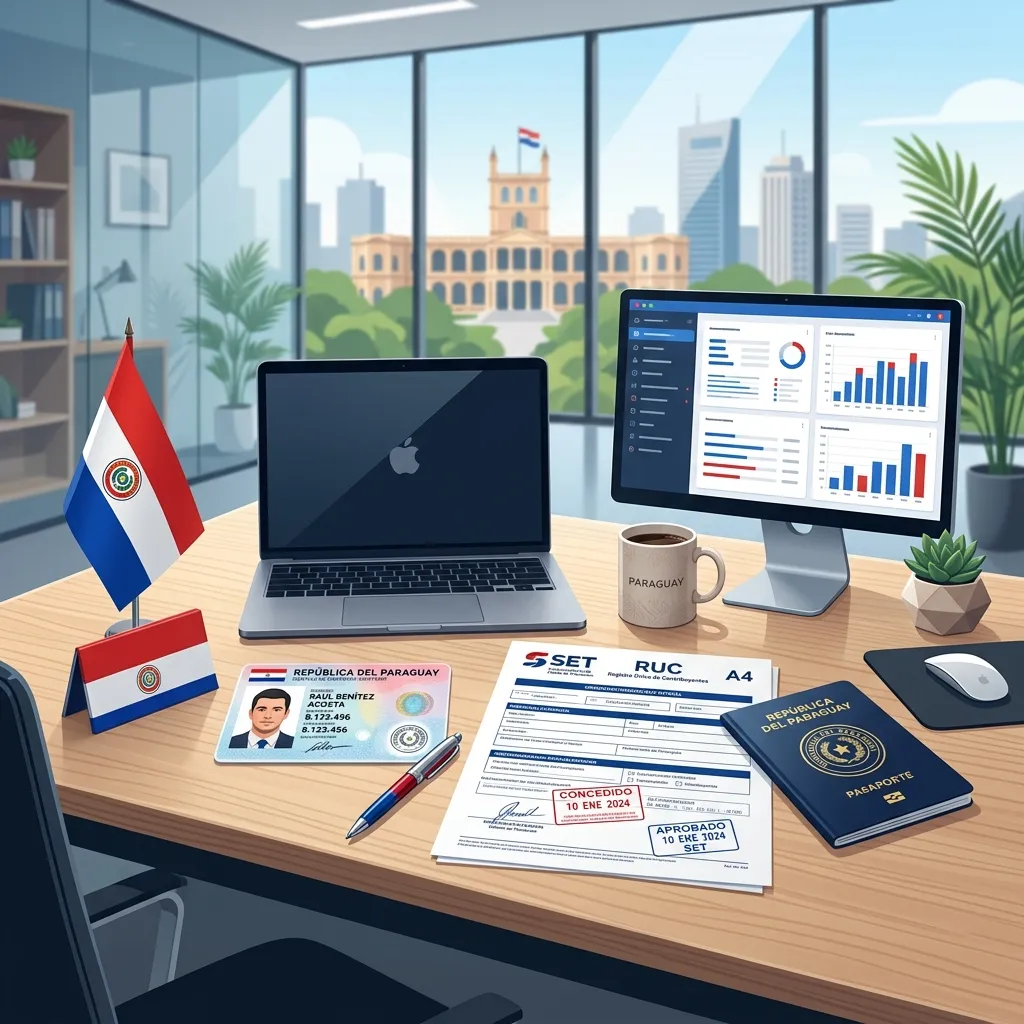
For years, digital nomads seeking to legally eliminate their tax bills had to look toward high-cost jurisdictions like Panama or deal with the complex administrative systems of European micro-states. However, in 2026, Paraguay has emerged as the most accessible, low-friction, and cost-effective tax haven for location-independent professionals. With a pure territorial tax system, extremely low physical presence requirements, and a straightforward path to obtaining an official Tax Residency Certificate, Paraguay offers an unbeatable combination of affordability and legal tax exemption.
TL;DR: Paraguay is the easiest 0% tax residency in the world to obtain. By leveraging its territorial tax system (Law No. 6380/2019), foreign-sourced income is taxed at a flat 0%, while domestic income is taxed at only 10%. With no minimum investment, minimal physical presence requirements (visit once a year), and a clear step-by-step application process, digital nomads can establish a legal tax-free base in South America.
Why Paraguay is the Perfect Tax Haven for Nomads
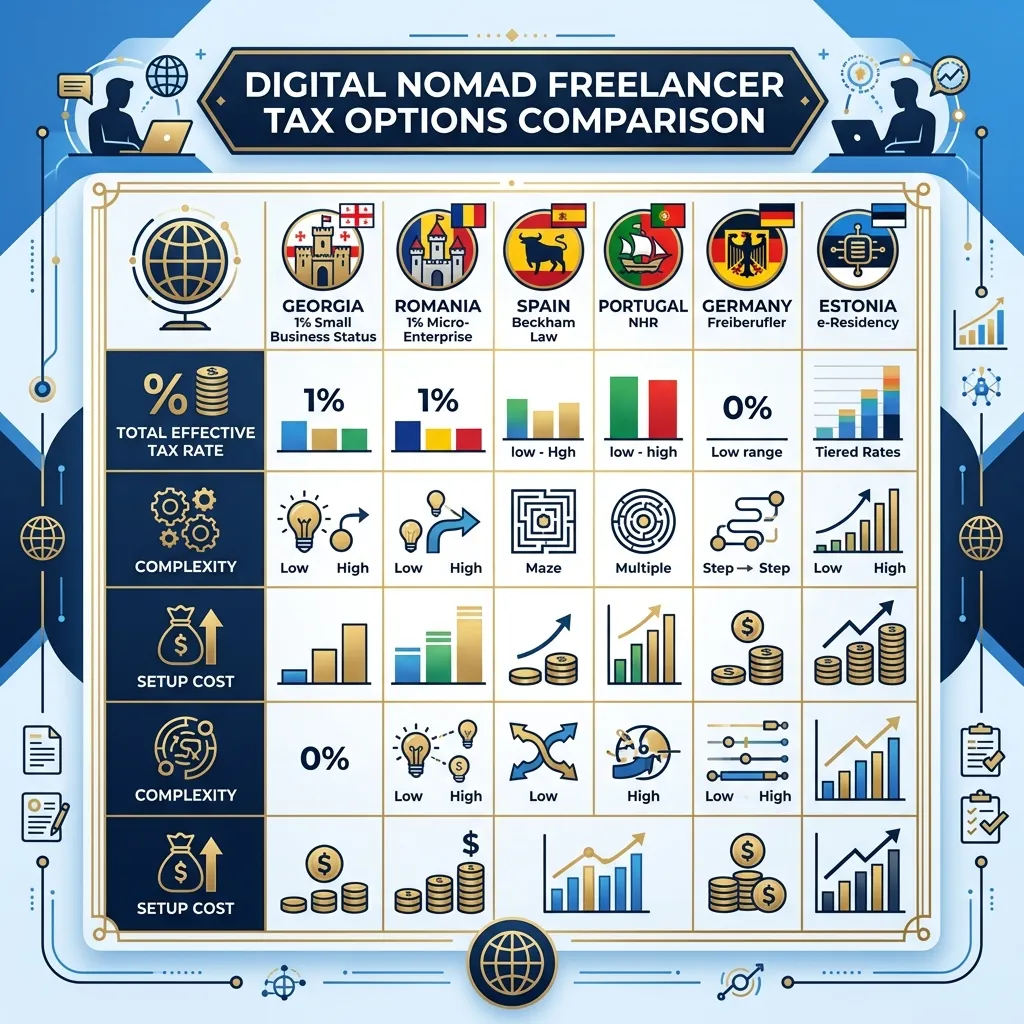
Most traditional tax havens require substantial investments. For example, Panama’s Friendly Nations Visa now requires a $200,000 real estate purchase, and Malta’s residency programs come with significant annual rental fees and tax obligations. Paraguay stands out by imposing almost no financial barriers to entry.
Here are the key reasons why digital nomads are relocating to Paraguay:
1. True Territorial Taxation
As administered by the Dirección Nacional de Ingresos Tributarios (DNIT)—Paraguay’s national tax authority—the country operates on a territorial tax system codified in Law No. 6380/2019 on Modernization and Simplification of the National Tax System. Under this framework, only income generated from activities carried out, assets located, or rights economically exploited within Paraguay is subject to tax.
Any income you earn from clients outside Paraguay, foreign companies, or international investments is taxed at exactly 0%.
2. No Investment Requirements
Unlike golden visas that demand hundreds of thousands of dollars in property or government bonds, Paraguay’s residency process is administrative. There are no real estate purchase requirements, no job creation mandates, and no mandatory bank deposits. The entire process can be completed for a few thousand dollars in legal and administrative fees.
3. Extremely Low Physical Presence Requirements
To maintain your temporary or permanent residency status, you do not need to live in Paraguay. Under the guidelines of the Dirección General de Migraciones (DGM), you only need to visit the country once every year (for permanent residents) or once every three years (for temporary residents under the newer immigration frameworks) to keep your permit active.
This makes it the ultimate “paper residency” or backup plan for nomads who prefer to travel continuously.
4. Low Cost of Living
If you do choose to spend time in Paraguay, you will find it to be one of the most affordable countries in South America. The capital city of Asunción offers modern apartments, fast internet (with fiber connections common in upscale neighborhoods like Villa Morra), and a vibrant culinary scene at a fraction of the cost of Western cities.
The Paraguayan Tax System: A Deep Dive
To understand how you pay 0% tax legally, we must look at the specific taxes levied in Paraguay:
Impuesto a la Renta Personal (IRP)
The IRP is Paraguay’s Personal Income Tax. Under Law No. 6380/2019, the IRP is split into two categories:
- Income from Work (Services): If you perform work inside Paraguay for a local employer or client, you are taxed at progressive rates of 8% to 10%, which is still exceptionally low by global standards.
- Income from Capital: This includes dividends, interest, and capital gains. If these are sourced within Paraguay, they are taxed at 8%.
If your income is derived from remote services provided to clients outside Paraguay, or if it is distributed from a foreign corporation (such as a US LLC) to your bank account, it is classified as foreign-sourced and is entirely exempt from the IRP.
Impuesto al Valor Agregado (IVA)
IVA is Paraguay’s Value Added Tax (VAT). The standard rate is 10% (with a reduced 5% rate for certain basic goods). If you invoice clients abroad from a Paraguayan sole proprietorship (known as a prestador de servicios), your export of services is exempt from IVA under local export promotion rules.
Impuesto a la Renta Empresarial (IRE)
If you choose to open a local Paraguayan corporation (a S.A. or S.A.S.), the corporate tax rate is a flat 10%. However, for most digital nomads, it is far more tax-efficient to use a foreign entity (like a US LLC) and receive the income directly as a tax resident of Paraguay.
Comparison: Paraguay vs. Other Low-Tax Residencies
To put Paraguay’s advantages into perspective, here is a comparison with other popular digital nomad tax destinations:
| Country | Minimum Investment / Cost | Physical Presence Required | Foreign Income Tax | Ease of Process |
|---|---|---|---|---|
| Paraguay | ~$2,000 (legal fees) | 1 visit per year | 0% | Very Easy (1-3 months) |
| Panama | $200,000 (Real Estate) | 1 visit every 2 years | 0% | Moderate (3-6 months) |
| Georgia | $0 (Small Business Status) | 183 days (to get TRC) | 1% (on first $180k) | Easy (1 month) |
| Cyprus | €30,000 (Non-Dom Status) | 60 days per year | 0% (on dividends/interest) | Complex (3-6 months) |
| Malta | €2,700/year (rent) + taxes | 183 days (typically) | 0% (remittance basis) | Complex (4-6 months) |
Step-by-Step Guide to Obtaining Paraguay Residency
Paraguay updated its immigration rules under Law No. 6984/2022 (Ley de Migraciones). Under the current system, all applicants must first apply for Temporary Residency (Radicación Temporaria), which is valid for 2 years. After maintaining temporary residency, you can apply for Permanent Residency (Radicación Definitiva).
Here is the exact step-by-step process to secure your residency and tax setup.
graph TD
    Step1[Step 1: Document Prep & Apostille] --> Step2[Step 2: Travel to Asunción]
    Step2 --> Step3[Step 3: Submit DGM Application]
    Step3 --> Step4[Step 4: Receive Temp Residency & ID Cédula]
    Step4 --> Step5[Step 5: Apply for RUC Tax ID]
    Step5 --> Step6[Step 6: Obtain Tax Residency Certificate]
Step 1: Gather and Apostille Documents in Your Home Country
Before traveling to Paraguay, you must obtain and legalize several documents. All documents must be apostilled (or legalized at a Paraguayan consulate if your country is not a signatory to the Hague Apostille Convention).
- Valid Passport: Must have at least 6 months of validity remaining.
- Police Clearance Certificate: A national criminal record check (e.g., FBI check for US citizens, ACRO for UK citizens) issued within the last 90 days.
- Birth Certificate: An official copy.
- Marriage Certificate: (If applying as a couple).
[!WARNING] Paraguay is extremely strict about the validity of background checks. The document must be issued within 90 days of your application submission in Asunción. If your FBI or national police check is older, it will be rejected, forcing you to restart the process.
Step 2: Translate and Legalize Documents in Asunción
Once you arrive in Paraguay, your apostilled documents must be translated into Spanish by a certified public translator registered in Paraguay. Your immigration lawyer will handle this, along with obtaining a local police report and a health certificate from a registered Paraguayan doctor.
Step 3: Submit the Application to Migraciones
You must visit the DGM headquarters in Asunción in person to submit your physical application, get your fingerprints taken, and sign the official declarations.
- The government application fee is approximately 2,500,000 PYG (around $330 USD).
- Once submitted, you will receive a document called the Mesa de Entrada, which serves as proof that your application is in progress and permits you to stay in the country legally.
Step 4: Receive Your Temporary Residency Card and Cédula
It typically takes 60 to 90 days for the DGM to approve your temporary residency. Once approved, you will receive a plastic Temporary Residency Card.
With this card, your lawyer can apply for your Cédula de Identidad (the official Paraguayan ID card) at the Department of Identifications (Identificaciones). The Cédula takes another 30 to 45 days to print.
Step 5: Activate Your Tax ID (RUC)
To be recognized as a tax resident and pay 0% tax legally, you need to register with the DNIT and obtain a Registro Único de Contribuyentes (RUC).
Your accountant will register you under the IRP (Impuesto a la Renta Personal) as an independent professional. This registration shows that you have an active tax profile in the country, which is a key requirement for the next step.
Step 6: Apply for a Tax Residency Certificate (TRC)
If your home country’s tax authority (like the IRS, HMRC, or ATO) audits you, simply showing them a residency card is often not enough to stop them from taxing you. You must prove you are a tax resident elsewhere.
The DNIT will issue a Certificado de Residencia Fiscal (Tax Residency Certificate) once you provide:
- Your valid Cédula.
- Your active RUC with tax declarations showing your foreign-sourced income (declared at 0% tax).
- Proof of a physical address in Paraguay (such as a lease agreement or utility bill in your name).
[!TIP] Even if you do not spend 183 days in Paraguay, the DNIT can issue a TRC if you demonstrate that you have established your “center of vital interests” in the country by registering a business, renting an apartment, and obtaining a tax ID. For more information on this, read our comprehensive Tax Residency Certificate Guide.
How to Structure Your Business Under Paraguay Residency
To ensure your income is classified as 0% foreign-sourced, you should avoid billing clients directly as a Paraguayan freelancer if you are physically working from a laptop in Asunción. If the tax office determines that the work was physically performed in Paraguay, they could claim it is domestic-sourced and subject to 10% IRP.
The most robust structure is to combine your Paraguay residency with a US Single-Member LLC.
- The Clients sign contracts with and pay your US LLC.
- The US LLC functions as a tax-transparent entity (disregarded entity) and pays 0% US tax on profits.
- The Profits are distributed to you, the owner, as a personal dividend/distribution.
- Paraguay views this money as a distribution from a foreign entity. Since the source of the capital and the corporate structure is external to Paraguay, the income is fully exempt from tax under Law No. 6380/2019.
This setup ensures complete compliance with both US and Paraguayan tax codes, leaving you with a clean, legal 0% global tax rate.
Real-Life Case Study: David, the SaaS Founder
- Profile: David is a British software developer who built a micro-SaaS generating €150,000 per year in net profit.
- Problem: If David stays in the UK, he faces a 25% corporate tax on his company’s profits, plus up to 45% income tax on personal withdrawals. He wants to travel the world while legally reducing his tax burden.
- Solution:
- David travels to Asunción, Paraguay, and applies for temporary residency.
- He secures his Cédula and sets up his RUC tax ID.
- He registers a US LLC in Wyoming to process client payments via Stripe.
- He submits his final tax return to HMRC in the UK, declaring his non-residency status under the UK Statutory Residence Test.
- He uses our Tax Calculator to plan his cost of living and business expenses.
By living as a nomad and using Paraguay as his tax home, David’s tax calculation changes dramatically:
- UK Tax: £0 (as a non-resident).
- US Tax: $0 (Wyoming LLC has no US ECI).
- Paraguay Tax: 0% (foreign-sourced distributions).
- Annual Tax Savings: Over £55,000 per year compared to his UK setup, which he reinvests directly into hiring designers and marketers to scale his SaaS.
Frequently Asked Questions
Can I complete the Paraguay residency process remotely?
No. You must travel to Asunción, Paraguay, at least once to submit your documents and complete the fingerprinting process at Migraciones. However, you can hire a local lawyer to pre-screen your documents, translate them, and schedule your appointments so that you only need to spend 3 to 5 business days in the country.
How much does the entire process cost?
If you hire a reputable immigration agency or lawyer to handle the translations, notary fees, local police filings, and accompany you to appointments, the total cost ranges between $1,500 and $2,500 USD. This is a one-time fee and is incredibly cheap compared to other residency programs.
Does temporary residency lead to citizenship?
Yes. Under the Paraguayan Constitution, you can apply for naturalization and a Paraguayan passport after holding permanent residency for 3 years. To qualify, you must show ties to the country, speak basic Spanish, and pass a basic history and constitution exam. Note that the naturalization process can take several years to process through the supreme court.
Do I need to speak Spanish to apply?
While the immigration officers only speak Spanish, you do not need to speak the language if you use an immigration agency. They will guide you through every office, handle all the paperwork, and translate the officers’ questions for you.
What is the “Cédula,” and why is it important?
The Cédula is the national identity card of Paraguay. In South America, the Cédula is far more important than your passport. It allows you to open bank accounts, sign lease agreements, register a RUC tax ID, sign up for utilities, and travel throughout the MERCOSUR region (Brazil, Argentina, Uruguay) without needing a passport.
Can I open a local bank account in Paraguay?
Yes. Once you have your Cédula and RUC, you can open accounts at major Paraguayan banks like Banco Atlas, Sudameris, or Itaú. You will need to show tax declarations or invoices to prove the source of your funds. Local accounts are excellent for keeping utility bills and showing “economic substance” to foreign tax departments.
Final Steps: Setting Up Your Plan
If you are ready to secure a legal 0% tax rate, Paraguay is the most logical starting point for your tax relocation strategy. Here is how to begin:
- Verify Your Documents: Request your national criminal background check and ensure your birth certificate is ready for the apostille process.
- Contact a Lawyer: Hire an experienced Paraguayan immigration specialist to review your paperwork before booking your flights to Asunción.
- Plan Your Exit: Ensure you understand the tax exit rules of your home country by reading our guides on Australian non-residency or UK tax residency rules.
- Use the Tax Calculator: Input your business profit into our Tax Calculator to calculate your net savings and set your financial goals for the upcoming fiscal year.