Spain Beckham Law: The Ultimate Tax Saving Guide for Digital Nomads (2026)

Spain’s Digital Nomad Visa has quickly become one of the most attractive options in Europe, rivaling programs like Italy’s Digital Nomad Visa and Portugal’s NHR regime. However, what makes it truly irresistible for high-earning remote workers is the ability to opt into the Beckham Law tax regime (officially known as the Régimen Especial para Trabajadores Desplazados).
TL;DR: Spain’s Beckham Law lets qualifying digital nomads pay a flat 24% income tax on Spanish-source income (up to €600,000) instead of progressive rates up to 47%. To qualify, you must not have been a Spanish tax resident in the prior 5 years and must apply within 6 months of arrival. The key benefit: high earners can save €10,000–€21,000+ per year compared to standard Spanish taxation.
Normally, residents in Spain are taxed on their worldwide income at progressive rates that can climb as high as 47%. Under the Beckham Law, qualifying digital nomads are taxed as non-residents, meaning they pay a flat 24% tax rate on Spanish-source income up to €600,000 per year.
In this guide, we will break down the exact eligibility requirements, tax brackets, and step-by-step instructions on how you can claim this tax perk in 2026.
What is the Spain Beckham Law Tax Regime?
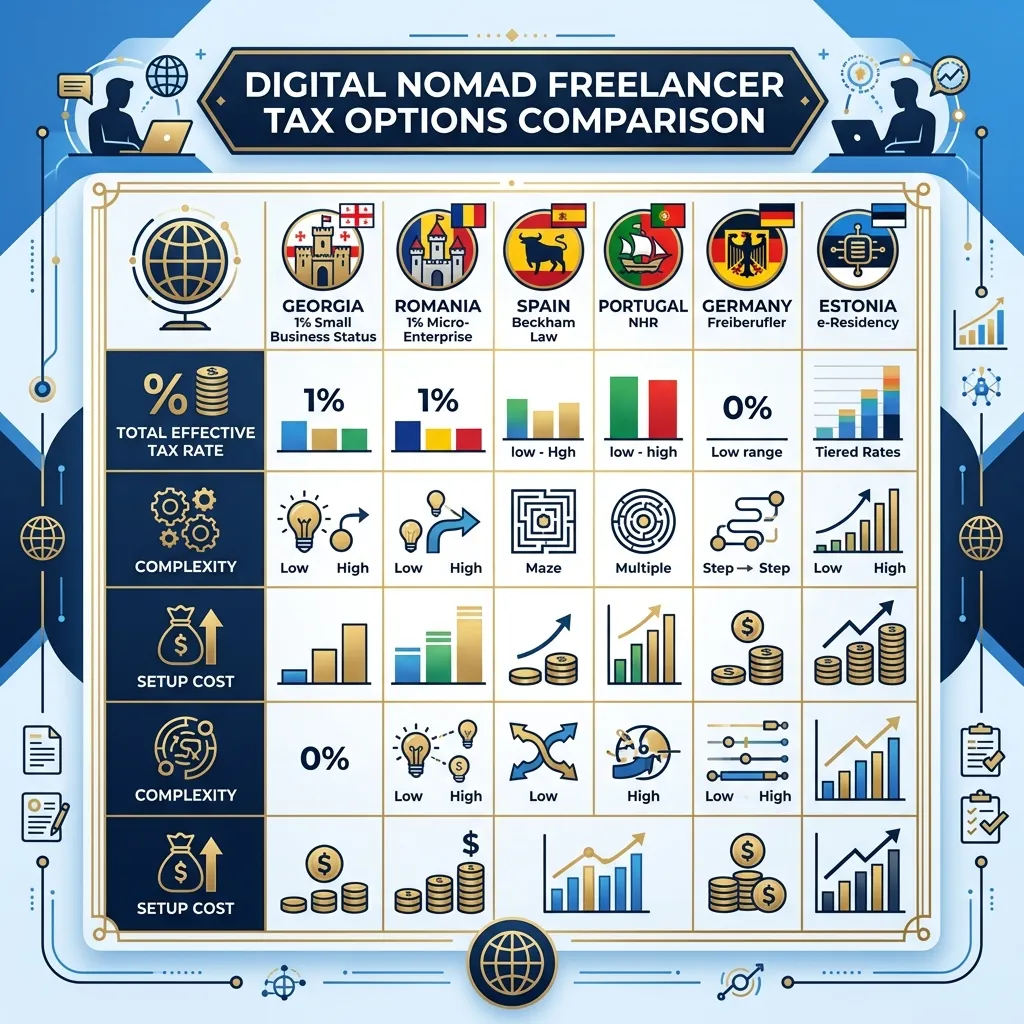
Initially created to attract high-profile foreign talents (including football player David Beckham, from whom the law gets its nickname), the beckham tax law spain was expanded under Spain’s Ley de Startups (Law 28/2022) in 2023 to include digital nomads, remote workers, and startup founders. If you are preparing to move, applying for the spain beckham law is one of the most important financial steps you can take.
Under this regime:
- You are taxed at a flat rate of 24% on Spanish income up to €600,000.
- Income above €600,000 is taxed at a flat 47%.
- No Wealth Tax (Impuesto sobre el Patrimonio) on foreign assets. Only assets physically located in Spain (e.g., Spanish real estate) are subject to wealth tax.
- No tax on foreign-source passive income (like dividends, interest, or capital gains earned from investments outside of Spain).
Standard Spanish Taxes vs. Beckham Law (2026)
To see the massive savings, let’s compare what a freelancer or remote worker pays under standard Spanish resident taxes vs. the Beckham Law.
| Gross Annual Income | Standard Spanish Tax (Approximate) | Beckham Law Tax (24% Flat) | Estimated Annual Savings |
|---|---|---|---|
| €50,000 | €11,800 | €12,000 | -€200 (Standard is better) |
| €75,000 | €23,450 | €18,000 | €5,450 |
| €100,000 | €34,500 | €24,000 | €10,500 |
| €150,000 | €57,000 | €36,000 | €21,000 |
[!TIP] The tipping point where the Beckham Law starts saving you money is around €55,000 to €60,000 in annual gross income. If you earn less than €50,000, you are usually better off paying standard progressive tax rates in Spain.
Am I Eligible under the Digital Nomad Visa?
Not every digital nomad automatically qualifies for the Beckham Law. To be eligible, you must meet the following criteria:
- New Resident: Per Royal Decree 687/2005 (and subsequent amendments), you must not have been a tax resident in Spain during the 5 years prior to your relocation.
- Move for Work: Your move to Spain must be a direct result of an employment contract (remote employee) or a digital nomad visa approval.
- No Local Income: You must not earn income through a permanent establishment (a physical office or local business entity) in Spain, other than your remote work or certified startup activity.
- Timeframe: You must apply within 6 months of starting your work activity or entering Spain on your visa. Note that Spain is part of the Schengen Area, so plan your travel timing accordingly.
Step-by-Step Application Process (Form 149)
To secure the 24% flat tax rate, you must apply to the Spanish Tax Agency (Agencia Tributaria). According to the Agencia Tributaria’s official guidelines, the application must be filed within 6 months of starting your work activity — Spain is extremely strict about this deadline.
Step 1: Obtain your NIE and Digital Certificate
You will need your NIE (foreign identity number) and a Spanish digital certificate (Certificado Digital) to access the online tax portal.
Step 2: File Form 149 (Modelo 149)
Form 149 is the official application to opt into the special tax regime. You must submit this along with:
- A copy of your Spanish Digital Nomad Visa.
- Your remote employment contract or letter from your employer approving relocation.
- Proof of the date you entered Spain (e.g., passport stamp or flight ticket).
Step 3: Wait for Approval
The Spanish Tax Agency typically takes 1 to 3 months to issue an approval letter. Once approved, you will receive a certificate confirming your status under the Beckham Law.
Step 4: Notify Your Employer (Form 150)
If you are a remote employee, you must present the approval certificate to your employer’s HR department. They will update your monthly withholding tax (IRPF) from the progressive rates down to the flat 24% rate.
Important Rules for 2026
- The Beckham Law is valid for the year you relocate to Spain, plus the next 5 consecutive tax years (total of 6 years).
- For freelancers (autónomos) applying for the Nomad Visa, the law has special stipulations: you must qualify as a “highly skilled professional” or carry out startup activities. Consult a specialist if you are fully self-employed as a freelancer rather than a remote employee.
- US citizens must still file US taxes on worldwide income. The Foreign Earned Income Exclusion (FEIE) can help offset part of the US tax burden while you benefit from the Beckham Law.