Mexico for Digital Nomads: Tax, Visa & Cost of Living Guide (2026)
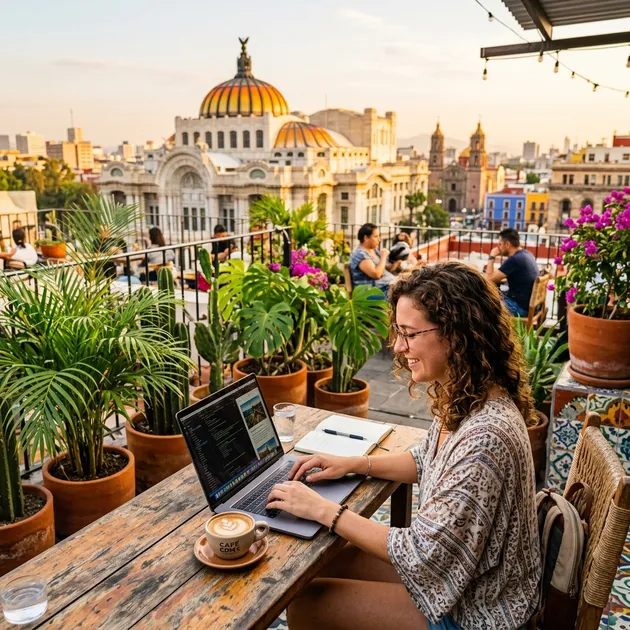
Mexico is the number one destination for US-based digital nomads — and it isn’t close. The combination of geographic proximity, same-timezone convenience, affordable cost of living, world-class food, fast internet, and a thriving remote-work culture makes Mexico the default choice for North American freelancers and remote workers. In 2026, more than 1.6 million US citizens are estimated to live in Mexico full-time or part-time, many of them earning income remotely.
TL;DR: Digital nomads in Mexico who stay under 183 days and earn exclusively from foreign clients generally owe no Mexican taxes. Those who become tax residents face progressive rates of 1.92%–35% on worldwide income under Mexico’s ISR, but may qualify for the RESICO simplified regime at just 1%–2.5% on gross revenue.
But Mexico’s appeal extends far beyond convenience. The country offers genuinely favorable tax treatment for non-residents, a straightforward temporary residency path, and a cost of living that allows you to live extremely well on modest freelance income. Whether you’re drawn to the cosmopolitan energy of Mexico City, the Caribbean beaches of Playa del Carmen, the artistic soul of Oaxaca, or the colonial charm of Mérida, Mexico has a place for every type of nomad.
This guide covers everything you need to know about living and working remotely in Mexico in 2026: visa options, the Mexican tax system and RFC registration, how to stay compliant, realistic cost of living data, coworking infrastructure, healthcare, and an honest look at the pros and cons.
Why Mexico Is #1 for US Digital Nomads
Mexico consistently ranks as the top destination for American remote workers, and the reasons are both practical and lifestyle-driven:
- Same time zones — Mexico spans CST, MST, and PST, making real-time collaboration with US teams effortless
- Geographic proximity — Flights from most US cities to Mexico City, Cancún, or Guadalajara are 2–5 hours and often under $200 round trip
- No visa required for short stays — US, Canadian, and EU citizens receive a 180-day FMM (tourist permit) on arrival
- Fast, reliable internet — Major cities offer 100+ Mbps fiber connections; coworking spaces routinely provide 200+ Mbps
- Cost of living 50–70% lower than comparable US cities
- Massive expat infrastructure — English-speaking doctors, co-living spaces, nomad meetups, and international schools
- World-class food and culture — From street tacos to Michelin-starred restaurants, Mexico’s culinary scene is unmatched
[!TIP] Mexico does not have a dedicated “digital nomad visa” like some countries. Instead, nomads use the standard 180-day tourist entry or apply for Temporary Resident status. Both are well-established paths with clear rules.
Visa Options for Digital Nomads
180-Day Tourist Entry (FMM)
The simplest path into Mexico for most nomads is the Forma Migratoria Múltiple (FMM), which grants up to 180 days of legal stay. This is not technically a visa but a visitor permit issued at the point of entry.
| Feature | Details |
|---|---|
| Duration | Up to 180 days (at immigration officer’s discretion) |
| Cost | Included in airline ticket price (or ~$35 USD at land crossings) |
| Eligible nationalities | US, Canada, EU, UK, Australia, Japan, and 60+ countries |
| Work permitted | No formal work authorization — but remote work for foreign clients is widely tolerated |
| Renewal | Exit and re-enter Mexico (no mandatory waiting period) |
Important caveats:
- Immigration officers may grant fewer than 180 days. Always request the full 180 days and have proof of accommodation, return flights, and financial means ready.
- The FMM does not grant legal authorization to work in Mexico. However, Mexican immigration authorities have historically not enforced this against remote workers earning income from foreign sources. This is a gray area — you are not employed by a Mexican company, but you are physically present while working.
- Border runs (exiting and re-entering to reset the 180-day clock) are legal but may attract scrutiny if done repeatedly. Immigration officers can deny entry or grant shorter stays if they suspect you are living permanently in Mexico without proper residency.
Temporary Resident Visa (Residente Temporal)
For nomads planning to stay longer than 180 days or who want a more secure legal status, the Temporary Resident visa is the standard path.
| Feature | Details |
|---|---|
| Duration | 1 year (renewable for up to 4 years total) |
| Cost | ~$40 USD application + ~$250–350 USD card issuance |
| Income requirement | Monthly income ≥ $2,500 USD (or savings ≥ $42,000 USD over 12 months) |
| Application | At a Mexican consulate in your home country (initial); renewal in Mexico |
| Work permitted | Can add a work permit (Permiso de Trabajo) if needed |
| Path to permanent residency | After 4 years of temporary residency |
Application process:
- Schedule an appointment at the Mexican consulate in your home country (or current country of residence)
- Submit required documents: passport, proof of income or savings (bank statements for the last 12 months), passport photos, application form
- Attend the interview — typically brief and straightforward
- Receive a visa sticker in your passport within 5–10 business days
- Enter Mexico within 180 days of visa issuance
- Exchange the visa for a Temporary Resident Card at the local INM (Instituto Nacional de Migración) office within 30 days of arrival
[!WARNING] The income requirements are strictly enforced. You must demonstrate consistent monthly income of at least $2,500 USD or cumulative savings of $42,000+ USD over the past 12 months. Bank statements must clearly show these amounts. Consulates vary in how strictly they interpret these thresholds — some require average monthly balance above $42,000, others look at the total of all deposits.
Permanent Resident Visa
After 4 consecutive years of Temporary Residency, you can apply for Permanent Resident status. Permanent residents can work freely in Mexico and have no requirement to renew their status. This path is relevant for nomads who decide to settle in Mexico long-term.
Mexico’s Tax System for Digital Nomads
Understanding Mexico’s tax system is critical for digital nomads, because getting it wrong can result in unexpected tax bills, penalties, or double taxation with your home country.
The Core Rule: Tax Residency
According to Mexico’s SAT (Servicio de Administración Tributaria), Mexico determines tax obligations based on tax residency, not just physical presence. Per the Mexican Income Tax Law (Ley del Impuesto Sobre la Renta, or LISR), you become a Mexican tax resident if:
- You establish a permanent home (casa habitación) in Mexico — even a rented apartment can qualify
- You have your center of vital interests in Mexico (more than 50% of your income is sourced from Mexico, or your primary professional activities are in Mexico)
- You spend 183 days or more in Mexico within a calendar year
[!IMPORTANT] If you are a tax resident of Mexico, you are taxed on your worldwide income at progressive rates from 1.92% to 35%. If you are a non-resident, you are only taxed on Mexican-sourced income at a flat 25% rate. Most digital nomads earning exclusively from foreign clients aim to avoid becoming tax residents.
RFC Registration
Per SAT regulations, the Registro Federal de Contribuyentes (RFC) is Mexico’s taxpayer identification number. If you become a tax resident or earn Mexican-sourced income, you must register for an RFC with the SAT (Servicio de Administración Tributaria).
Who needs an RFC:
- Anyone who becomes a Mexican tax resident
- Anyone earning income from Mexican clients or companies
- Temporary and Permanent Residents who engage in economic activity in Mexico
How to get an RFC:
- Schedule an appointment at your local SAT office
- Bring your passport, proof of address (utility bill or bank statement), CURP (if available), and immigration document
- Complete the registration process (typically 1–2 hours)
- Receive your RFC and e.firma (electronic signature) for online tax filings
ISR: Mexico’s Progressive Income Tax Rates (2026)
If you are a Mexican tax resident, your worldwide income is subject to Impuesto Sobre la Renta (ISR) at the following progressive rates:
| Annual Income (MXN) | Annual Income (~USD) | Tax Rate |
|---|---|---|
| Up to $8,952 | Up to ~$500 | 1.92% |
| $8,953 – $75,984 | $500 – $4,200 | 6.40% |
| $75,985 – $133,536 | $4,200 – $7,400 | 10.88% |
| $133,537 – $155,229 | $7,400 – $8,600 | 16.00% |
| $155,230 – $185,852 | $8,600 – $10,300 | 17.92% |
| $185,853 – $374,837 | $10,300 – $20,800 | 21.36% |
| $374,838 – $590,796 | $20,800 – $32,800 | 23.52% |
| $590,797 – $1,127,926 | $32,800 – $62,700 | 30.00% |
| $1,127,927 – $1,503,902 | $62,700 – $83,600 | 32.00% |
| $1,503,903 – $4,511,707 | $83,600 – $250,700 | 34.00% |
| Above $4,511,707 | Above $250,700 | 35.00% |
Non-Resident Tax Rate
Non-residents earning Mexican-sourced income pay a flat 25% withholding tax on gross income. This rate applies to income from Mexican employers or clients. If you are a non-resident earning exclusively from foreign clients, you generally owe no Mexican tax.
RESICO: Simplified Tax Regime
Based on official data from Mexico’s SAT, Mexico introduced the Régimen Simplificado de Confianza (RESICO) in 2022, a simplified tax regime for individuals earning up to MXN 3,500,000 (~$194,000 USD) annually under the LISR. RESICO offers significantly reduced rates:
| Annual Income (MXN) | RESICO Rate |
|---|---|
| Up to $300,000 | 1.00% |
| $300,001 – $600,000 | 1.10% |
| $600,001 – $1,000,000 | 1.50% |
| $1,000,001 – $2,500,000 | 2.00% |
| $2,500,001 – $3,500,000 | 2.50% |
[!TIP] RESICO rates are remarkably competitive — comparable to Georgia’s 1% Small Business Status. However, eligibility requires Mexican tax residency and proper RFC registration. Consult a Mexican tax advisor (contador) to determine if RESICO is available for your specific situation as a foreign freelancer.
How to Stay Tax-Compliant in Mexico
Strategy 1: Stay Under the Tax Residency Radar (Most Common)
The majority of digital nomads in Mexico adopt this approach:
- Stay fewer than 183 days per calendar year
- Maintain your tax residency in your home country (or another jurisdiction like Dubai or Georgia)
- Earn exclusively from foreign clients — no Mexican-sourced income
- Do not establish a permanent home (keep leases short-term or use co-living spaces)
- Maintain a Tax Residency Certificate from your primary jurisdiction
- File taxes in your home country and claim the Foreign Earned Income Exclusion if you’re a US citizen
Strategy 2: Become a Tax Resident and Use RESICO
If you plan to live in Mexico long-term (4+ years toward permanent residency), becoming a tax resident and registering under RESICO can be advantageous:
- Register for RFC and enroll in RESICO
- Pay 1.0%–2.5% on gross revenue (depending on income level)
- File monthly and annual returns through the SAT portal
- Use Mexico’s Double Taxation Agreements to avoid paying tax twice
Strategy 3: Establish a Mexican Company
For nomads with significant income from Mexican clients or who want to build a local business presence:
- Form a Sociedad de Responsabilidad Limitada (S. de R.L.) — Mexican LLC equivalent
- Corporate tax rate: 30% on net profit
- Dividend distribution tax: 10% additional on distributed profits
- This option is typically only worth it if you have Mexican clients or need local invoicing (facturación)
Cost of Living: City-by-City Comparison
Mexico offers dramatically different lifestyles and costs depending on where you live. Here’s a realistic breakdown for 2026:
Monthly Cost Comparison (USD)
| Expense | Mexico City (CDMX) | Playa del Carmen | Oaxaca City | Mérida |
|---|---|---|---|---|
| One-bedroom apartment (center) | $600 – $1,200 | $700 – $1,400 | $350 – $700 | $400 – $800 |
| One-bedroom apartment (outside center) | $350 – $700 | $450 – $900 | $200 – $450 | $250 – $500 |
| Utilities (electricity, water, internet) | $50 – $100 | $60 – $120 | $40 – $80 | $45 – $90 |
| Groceries | $200 – $350 | $250 – $400 | $150 – $250 | $150 – $280 |
| Dining out | $150 – $400 | $200 – $500 | $100 – $250 | $120 – $300 |
| Transportation | $30 – $80 | $40 – $100 | $20 – $50 | $25 – $60 |
| Coworking space | $100 – $250 | $120 – $300 | $60 – $150 | $70 – $180 |
| Health insurance (private) | $50 – $150 | $50 – $150 | $50 – $150 | $50 – $150 |
| Total (Mid-Range) | $1,300 – $2,300 | $1,500 – $2,700 | $800 – $1,500 | $900 – $1,700 |
City Profiles
Mexico City (CDMX) — The largest city in North America is the undisputed hub for digital nomads in Mexico. Neighborhoods like Roma Norte, Condesa, and Coyoacán offer tree-lined streets, world-class restaurants, vibrant nightlife, and an enormous coworking scene. Internet speeds regularly exceed 200 Mbps in fiber-connected apartments. CDMX is also the most accessible city, with direct flights to virtually every major US and European city.
Playa del Carmen — Located on the Caribbean coast of the Yucatán Peninsula, Playa offers a beach-town lifestyle with surprisingly good infrastructure. The nomad community here is large and active, centered around Quinta Avenida and the coworking spaces along the coast. Costs are higher than the national average due to tourism demand, but significantly lower than comparable beach destinations in the US or Europe.
Oaxaca City — The cultural heart of Mexico, Oaxaca is beloved for its indigenous heritage, mezcal scene, and artistic community. It’s the most affordable option on this list and offers a slower, more authentic Mexican experience. Internet infrastructure is good but less consistent than CDMX. Oaxaca is increasingly popular with nomads seeking a creative, community-driven atmosphere.
Mérida — The capital of the Yucatán state, Mérida offers a blend of colonial architecture, Mayan culture, and modern amenities. It is one of the safest cities in Mexico and has a growing expat community. Costs are moderate, and the city’s walkability and cultural offerings make it an excellent choice for long-term stays.
Internet and Coworking Infrastructure
Mexico’s internet infrastructure has improved dramatically in recent years, particularly in major cities.
Internet Quality by City
| City | Average Speed (Fiber) | Average Speed (Non-Fiber) | Reliability |
|---|---|---|---|
| Mexico City | 150–300 Mbps | 30–80 Mbps | Excellent |
| Playa del Carmen | 100–200 Mbps | 20–60 Mbps | Good |
| Guadalajara | 150–250 Mbps | 30–80 Mbps | Excellent |
| Oaxaca City | 80–150 Mbps | 15–50 Mbps | Good |
| Mérida | 100–200 Mbps | 25–70 Mbps | Good |
Coworking Spaces
Mexico has one of the densest coworking networks in Latin America:
- Mexico City: 200+ coworking spaces including WeWork, IOS Offices, Centraal, and dozens of independent spaces. Prices range from $100–$250/month for a hot desk.
- Playa del Carmen: 30+ spaces including Nest, Bunker, and Terminal Cowork. Prices range from $120–$300/month.
- Oaxaca: 15+ spaces including Convivio, Impact Hub, and local collectives. Prices range from $60–$150/month.
- Mérida: 20+ spaces with growing options. Prices range from $70–$180/month.
[!TIP] Most coworking spaces in Mexico offer day passes ($8–$15 USD) and weekly passes ($40–$70 USD) in addition to monthly memberships. Try several spaces before committing to a monthly plan.
Healthcare in Mexico
Healthcare is one of Mexico’s most underrated advantages for digital nomads. The country has a well-developed private healthcare system that delivers high-quality care at a fraction of US costs.
Healthcare Options
| Option | Cost | Coverage | Quality |
|---|---|---|---|
| IMSS (public) | ~$50/year for voluntary enrollment | Basic coverage, long wait times | Variable |
| Private insurance (Seguros GNP, MetLife) | $50–$150/month | Comprehensive, private hospitals | Excellent |
| International insurance (SafetyWing, Cigna) | $40–$120/month | Worldwide coverage | Excellent |
| Out-of-pocket | Pay per visit | N/A | Depends on provider |
Costs Comparison (Out-of-Pocket)
| Service | Mexico (USD) | United States (USD) |
|---|---|---|
| General practitioner visit | $20 – $50 | $150 – $300 |
| Specialist visit | $40 – $100 | $250 – $600 |
| Dental cleaning | $30 – $60 | $100 – $300 |
| MRI scan | $150 – $400 | $1,000 – $3,000 |
| Emergency room visit | $100 – $500 | $1,000 – $5,000+ |
Mexico’s private hospitals in major cities — particularly Hospital ABC, Médica Sur, and Hospital Ángeles — are internationally accredited and staffed by English-speaking doctors, many of whom trained in the US or Europe.
Pros and Cons of Mexico for Digital Nomads
Advantages
- Same time zones as the US — Seamless collaboration with North American clients and teams
- Extremely affordable — Live comfortably in CDMX for $1,500/month, or in Oaxaca for under $1,000
- No visa required for stays up to 180 days for most Western nationalities
- Fast, reliable internet in major cities with widespread fiber coverage
- World-class food — Arguably the best food culture in the Americas
- Large, established nomad community — Easy to build a social network
- Excellent private healthcare at 70–80% lower cost than the US
- Rich culture and diversity — Every region offers a distinct experience
- Easy path to residency via the Temporary Resident visa
Disadvantages
- No dedicated digital nomad visa — Working remotely on a tourist permit is a legal gray area
- Tax complexity — Becoming a tax resident triggers progressive rates up to 35%
- Safety concerns — While major nomad cities are generally safe, petty crime and regional violence remain concerns
- Bureaucracy at INM — Immigration processes can be slow and inconsistent
- Air quality in CDMX — Mexico City regularly experiences poor air quality days
- Legal ambiguity around remote work — No explicit legal framework for remote workers earning from foreign sources
- Currency fluctuation — The Mexican Peso (MXN) can be volatile, though this cuts both ways
Frequently Asked Questions
Do I need to pay Mexican taxes if I work remotely for a US company?
If you are a non-resident (stay under 183 days, no permanent home, no RFC) and your income comes exclusively from a foreign employer or foreign clients, you generally owe no Mexican taxes. Mexico taxes non-residents only on Mexican-sourced income. However, if you establish tax residency, your worldwide income becomes taxable. This is the most critical distinction for digital nomads to understand.
Can I open a Mexican bank account as a tourist?
Opening a bank account on a tourist FMM is extremely difficult in 2026. Most Mexican banks (BBVA, Banorte, Citibanamex) require a Temporary or Permanent Resident card. Some fintech alternatives like Mercado Pago, Stori, or Nu may allow account opening with a passport and CURP, but with limited functionality. Most nomads on tourist permits use Wise or US-based accounts with no foreign transaction fees.
Is the 180-day FMM renewable without leaving Mexico?
No. The FMM cannot be extended beyond the days initially granted. To reset the clock, you must leave Mexico and re-enter. Many nomads do quick trips to Guatemala, Belize, or the US to reset their 180-day period. There is no mandatory waiting period outside Mexico, but immigration officers may grant fewer days on re-entry if they suspect you are living permanently.
How does Mexico’s RESICO compare to Georgia’s 1% tax?
Both offer remarkably low rates — Georgia’s Small Business Status charges a flat 1% on gross revenue up to ~€180,000, while Mexico’s RESICO ranges from 1.0% to 2.5% depending on income level (up to ~$194,000 USD). The key difference is that RESICO requires Mexican tax residency and a permanent commitment to the country, while Georgia offers a simpler setup. RESICO also has more administrative requirements, including monthly filings and electronic invoicing (CFDI).
Do US citizens need to worry about double taxation in Mexico?
Yes. The US taxes its citizens on worldwide income regardless of residency. If you become a Mexican tax resident, you could face taxation in both countries. However, several mechanisms can mitigate this: the US-Mexico Double Taxation Treaty, the Foreign Earned Income Exclusion (FEIE) which excludes up to $130,000 (2026) of foreign earned income, and Foreign Tax Credits for taxes paid to Mexico. Work with a cross-border tax advisor to optimize your position. See our guide to double taxation treaties for a deeper dive.
What’s the best city in Mexico for digital nomads in 2026?
Mexico City is the best all-around choice for most digital nomads. It offers the fastest internet, largest coworking network, most diverse food and entertainment scene, and best flight connections. If you prefer beaches, Playa del Carmen is the top coastal option. For culture and affordability, Oaxaca is hard to beat. For safety and a quieter pace, Mérida is increasingly popular. The best choice depends on your priorities — check our best digital nomad countries guide for a broader comparison.
Final Thoughts
Mexico is the most practical destination for digital nomads, especially those based in the Americas. The combination of proximity to the US, same-timezone convenience, affordable cost of living, excellent food and culture, and a well-trodden path for remote workers makes it the obvious first choice for millions of location-independent professionals.
The tax situation requires careful navigation — staying under the 183-day threshold and maintaining your tax residency elsewhere is the simplest strategy, while long-term residents can take advantage of the competitive RESICO regime. Either way, Mexico rewards those who plan ahead and understand the rules.
Ready to compare Mexico with other digital nomad destinations? Use our Tax Calculator to model your specific income scenario, and check out our rankings of the best digital nomad countries for 2026 to find your ideal base.